
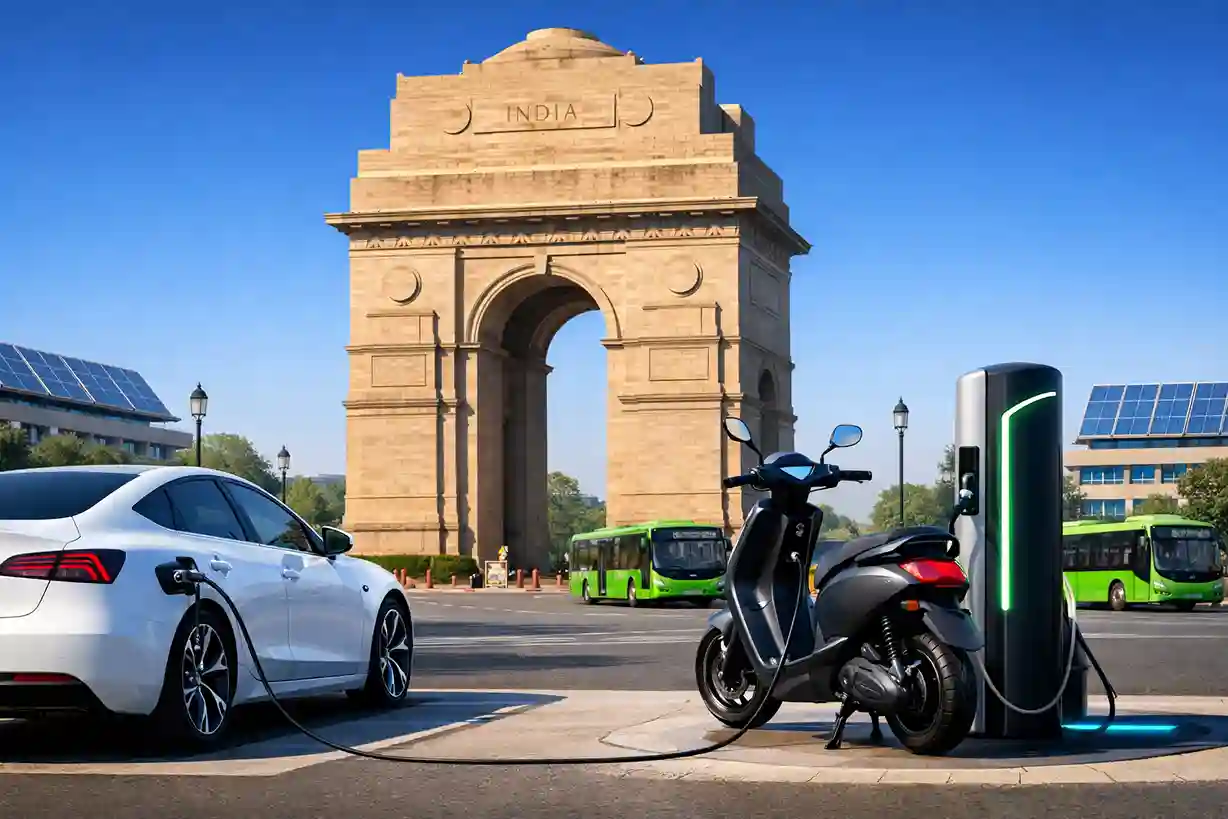
Introduction: A Bold Step Towards a Cleaner Future
Delhi, one of the most polluted cities in the world, is taking a major step toward sustainability with its proposed Electric Vehicle (EV) Policy 2024–2028. The government aims to transform the capital into the “EV Capital of India” by aggressively promoting electric mobility and reducing dependence on petrol and diesel vehicles.
With rising pollution levels and increasing fuel costs, this policy could reshape how people commute in the city. But what does it actually mean for you as a buyer? Let’s break it down in a simple and practical way.
At a Glance: Key Highlights of Delhi EV Policy
| Feature | Key Benefit / Deadline |
|---|---|
| Max Subsidy | ₹1,00,000 (Scrapping Incentive) |
| Free Registration | Electric Cars up to ₹30 Lakh |
| Petrol 2-Wheeler Ban | From April 2028 |
| Hybrid Benefit | 50% Off on Registration |
The Big Announcement: Petrol Two-Wheelers Phase-Out by 2028
One of the most significant proposals in the policy is the gradual phase-out of petrol-powered two-wheelers.
Key Highlights
- Deadline: No new petrol two-wheelers will be registered after April 2028
- Gradual Transition: The shift will happen in phases with yearly reduction targets
- Goal: Move towards 100% electric two-wheeler adoption
It’s important to note that existing petrol vehicles won’t be banned immediately. However, over time, owning one may become less economical due to rising costs and policy restrictions.
Three-Wheelers to Go Electric Even Earlier
The commercial transport sector is also a major focus.
What’s Changing?
- New registrations of petrol and CNG auto-rickshaws may stop by 2027
- Push toward electric autos and commercial EV fleets
This will play a crucial role in reducing pollution from high-usage vehicles in the city.
Huge Financial Incentives: Up to ₹1 Lakh Benefits
To make EV adoption more attractive, the government is offering strong financial incentives.
1. Scrapping Incentive
If you scrap your old petrol or diesel vehicle:
- Up to ₹1,00,000 for cars
- Up to ₹10,000 for two-wheelers
This encourages replacing older, polluting vehicles with cleaner alternatives.
2. Direct Purchase Subsidy
- Subsidy is based on battery capacity (kWh)
- Higher battery capacity = higher benefit
Expected Benefit:
- Two-wheelers may get around ₹5,000 per kWh (up to ₹30,000)
- Maximum benefits likely in the initial phase of the policy
This makes early adoption financially smarter.
Free Registration for Electric Cars (Up to ₹30 Lakh)
Buying an electric car in Delhi could become significantly cheaper.
Key Benefits
- Zero registration charges
- No road tax
- Applicable for private vehicles only
- Valid for EVs priced up to ₹30 lakh until 2028
This can save buyers a substantial amount, making EVs more competitive with petrol vehicles.
Hybrid Cars Also Get Benefits
The policy also provides support for strong hybrid vehicles.
What You Get
- 50% discount on registration fees
- Applicable for hybrid cars under ₹30 lakh
This is ideal for buyers who want better fuel efficiency but are not fully ready to switch to electric vehicles.
Impact on Ola, Uber, Zomato & Delivery Services
The policy targets large fleet operators as well.
Mandatory EV Transition
- Platforms like Ola, Uber, Zomato, and Swiggy must adopt EVs
- All new fleet additions must be electric
Delivery Segment Deadline
- By 2026, a large portion of delivery vehicles must be electric
This will significantly cut emissions from high-frequency urban transport.
Why This Policy Matters
1. Cleaner Environment
EVs produce zero tailpipe emissions, which can drastically improve Delhi’s air quality.
2. Lower Running Costs
- No petrol expenses
- Lower maintenance
- Better long-term savings
3. Future-Ready Mobility
With government support and infrastructure growth, EVs represent the future of transportation.
Challenges Ahead
Despite the benefits, a few challenges remain:
1. Charging Infrastructure
- Need for widespread and fast charging stations
2. Consumer Mindset
- Hesitation due to range anxiety and battery concerns
3. Initial Cost
- Higher upfront cost compared to petrol vehicles
However, these challenges are expected to reduce as technology improves.
How to Claim EV Subsidy in Delhi (Step-by-Step Guide)
This is where most buyers get confused—so here’s a simple breakdown:
- Buy an eligible EV from an authorized dealer
- Dealer uploads documents on the government portal
- Subsidy is credited directly to your Aadhaar-linked bank account
- If scrapping an old vehicle:
- Visit an authorized scrapping center
- Obtain a Certificate of Deposit
- Submit it to claim additional scrapping incentive
This process is designed to be smooth and mostly handled by the dealer.
Should You Buy an EV Now?
If you are planning to purchase a new vehicle, this is a great time to consider EVs.
Why Now is the Best Time
- Maximum subsidies available early
- Future restrictions on petrol vehicles
- Rising fuel prices
Early adopters will enjoy the highest benefits.
Conclusion: Is Delhi Ready for the EV Revolution?
Delhi’s EV Policy 2024–2028 is a bold and transformative step toward a cleaner future. The proposed ban on petrol two-wheelers by 2028, combined with strong incentives and cost savings, clearly signals the direction of future mobility.
While the transition may take time, the long-term benefits—lower costs, cleaner air, and modern infrastructure—make EV adoption a smart choice.
Call to Action
What do you think? Will you switch to an EV now or wait until 2028? Let us know in the comments below!