
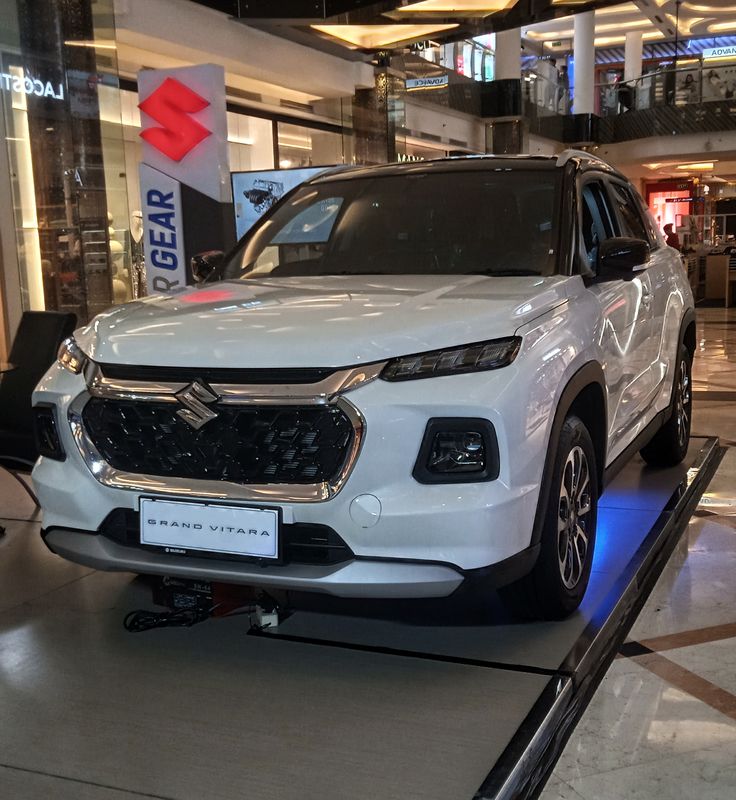
Maruti Suzuki has once again proven that it understands the Indian car market better than most global manufacturers. Over the years, the brand has successfully used a “dual-product strategy”, where one core model is presented in two different avatars to attract multiple buyer segments. The most recent and successful example of this strategy is the Baleno–Fronx combination, and now Maruti seems ready to repeat the same playbook with Victoris and Grand Vitara.
Industry reports and market analysis strongly suggest that Maruti Victoris, an upcoming SUV-styled offering, could be positioned similarly to how Fronx was derived from the Baleno. If this strategy works as planned, it could further strengthen Maruti’s dominance in the compact and mid-size SUV segments.
Understanding Maruti’s Fronx–Baleno Strategy
To understand what Maruti is planning with Victoris, it is important to look at the Baleno–Fronx success story.
The Baleno has been one of Maruti’s best-selling premium hatchbacks, known for its reliability, spacious cabin, and fuel efficiency. Instead of creating an entirely new vehicle, Maruti cleverly reworked the Baleno platform to create the Fronx—a crossover-style car with SUV-inspired design elements.
Why the Strategy Worked
Shared platform reduced development cost
Different body style attracted new buyers
Minimal overlap despite similar underpinnings
Higher profit margins on crossover design
The Fronx quickly gained popularity among buyers who wanted an SUV look without moving into a higher price bracket, proving that this formula works exceptionally well in India.
Also Read :- Maruti Suzuki’s Strong SUV Performance: 4 Models Among Top 10 in Nov 2025

Grand Vitara: The Strong Foundation
The Maruti Grand Vitara already plays a crucial role in the company’s SUV lineup. Positioned in the highly competitive mid-size SUV segment, it competes with models like the Hyundai Creta, Kia Seltos, and Toyota Hyryder.
What Makes Grand Vitara Important
Strong hybrid technology
Excellent fuel efficiency
Premium positioning for Maruti
Growing acceptance in urban markets
Despite its strengths, the Grand Vitara caters mainly to buyers looking for a balanced family SUV rather than a bold or sporty design. This is where Victoris could step in.
Victoris: The Next Fronx?
Maruti Victoris is expected to follow the same strategy as Fronx—built on an existing platform but positioned as a more stylish and aspirational alternative.
Just as Fronx sits alongside Baleno, Victoris could be positioned alongside the Grand Vitara, offering:
More aggressive styling
Coupe-like or SUV-crossover design
Youth-focused appeal
Slightly premium pricing
This approach allows Maruti to expand its reach without cannibalizing sales, something it has mastered over the years.
Design Philosophy: Sporty vs Practical
If Victoris follows the Fronx playbook, design will be its biggest differentiator.
Expected Design Direction for Victoris
Sharper front fascia
Coupe-inspired roofline
Sportier alloy wheels
Distinct lighting elements
While the Grand Vitara focuses on clean, mature, and family-oriented design, Victoris is likely to target younger buyers who prioritize looks and road presence.
Powertrain & Platform Sharing
One of the biggest advantages of Maruti’s strategy is platform and engine sharing.
Victoris is expected to:
Use the same platform as Grand Vitara
Share petrol and hybrid engine options
Offer both manual and automatic gearboxes
This helps Maruti:
Keep production costs low
Maintain reliability
Ensure easy servicing and spare availability
At the same time, cosmetic and feature differences will justify Victoris as a separate product.
Pricing Strategy: Smart Positioning
Pricing will play a key role in Victoris’ success. Based on Maruti’s past approach, Victoris is likely to be:
Slightly more expensive than Grand Vitara base variants
Positioned as a lifestyle-oriented SUV
Offered in fewer but well-equipped trims
This mirrors how Fronx is priced slightly above Baleno, despite sharing core mechanical components.
Target Audience: Expanding the Buyer Base
Maruti’s strength lies in its ability to serve multiple buyer personas with minimal overlap.
Grand Vitara Buyers
Family-oriented
Mileage-conscious
Long-term ownership mindset
Victoris Buyers (Expected)
Younger professionals
Style-focused customers
Buyers upgrading from hatchbacks or compact SUVs
This dual-product strategy ensures Maruti does not lose customers to rival brands offering sportier alternatives.
Competition Impact
If Victoris launches as expected, it could disrupt the market in a big way. Rivals like Hyundai, Kia, and even Tata rely heavily on distinct platforms for different body styles, which increases costs.
Maruti’s approach allows it to:
Launch products faster
Price them competitively
Maintain profitability
This could force competitors to rethink their strategies in the mid-size SUV segment.
Why Maruti’s Strategy Makes Sense
The Indian car market is extremely price-sensitive yet aspiration-driven. Buyers want:
SUV styling
Premium features
Reliable engines
Affordable ownership
Maruti’s Fronx–Baleno formula perfectly fits this demand, and applying it again with Victoris and Grand Vitara seems like a logical and calculated move.
Final Verdict
Maruti Suzuki appears ready to repeat its winning Fronx–Baleno strategy with the upcoming Victoris and the already successful Grand Vitara. By offering two distinct body styles on the same platform, Maruti can target different customer groups without significant additional investment.
If Victoris delivers bold styling, competitive pricing, and Maruti’s trusted reliability, it could become another blockbuster product, further strengthening Maruti’s leadership in the Indian SUV market.
For buyers, this strategy means more choice, better value, and modern designs, while for Maruti, it ensures sustained growth in one of the most competitive segments in India.