

India’s passenger vehicle market delivered a clear message in 2025: Maruti Suzuki retained its leadership at the top, while Mahindra staged a strong surge to finish second, overtaking Tata Motors and Hyundai Motor India. The reshuffle highlights how changing buyer preferences, fresh launches, and SUV momentum reshaped the rankings.
2025: A Year of Clear Winners—and Shifting Fortunes
After a competitive year marked by frequent launches and segment battles, overall sales data shows a decisive order at the top. Maruti Suzuki continued to dominate on volumes and reach, while Mahindra’s SUV-led strategy delivered consistent month-on-month gains. In contrast, Tata Motors and Hyundai Motor India faced pressure from intensifying competition and a rapidly evolving market.
Maruti Suzuki: Leadership Through Breadth and Reach
Maruti’s No.1 finish in 2025 was driven by a familiar formula—broad portfolio, competitive pricing, and unmatched network reach.
Why Maruti Stayed on Top
Strong presence across hatchbacks, sedans, and compact SUVs
Reliable ownership experience and high resale value
Extensive dealer and service footprint across Tier-1 to Tier-3 markets
Timely refreshes and variants that kept demand steady
Maruti’s ability to serve both urban and rural demand insulated it from segment slowdowns and kept volumes resilient.
Mahindra’s Climb to Second: SUVs Lead the Charge
The standout story of 2025 was Mahindra’s rise to second place. Powered by a robust SUV line-up, Mahindra capitalized on India’s sustained appetite for higher-stance vehicles.
What Worked for Mahindra
Strong demand for rugged and lifestyle SUVs
Clear brand positioning around capability and design
Improved production ramp-ups that shortened waiting periods
Competitive feature packaging that resonated with buyers
Mahindra’s momentum was not a one-off spike; it built gradually through the year, allowing the brand to overtake both Tata and Hyundai by year-end.

Tata Motors: Strong Portfolio, Tough Competition
Tata Motors remained a significant force, especially with its focus on safety and design. However, 2025 proved challenging as competition intensified across key price bands.
Key Headwinds
Increased rivalry in compact and midsize SUVs
Buyers comparing features more closely across brands
Need for quicker refresh cycles in high-volume segments
Despite slipping to third, Tata’s fundamentals—safety credentials, design language, and EV leadership—continue to keep it firmly in the top tier.
Hyundai Motor India: Regrouping After a Competitive Year
Hyundai Motor India closed 2025 just behind Tata, reflecting a year of recalibration.
What Impacted Hyundai
Crowded segments with aggressive pricing
Feature parity pressures from newer rivals
Transition phase ahead of upcoming updates and launches
Hyundai’s strong brand equity and service network remain advantages, and the brand is widely expected to rebound with refreshed products.
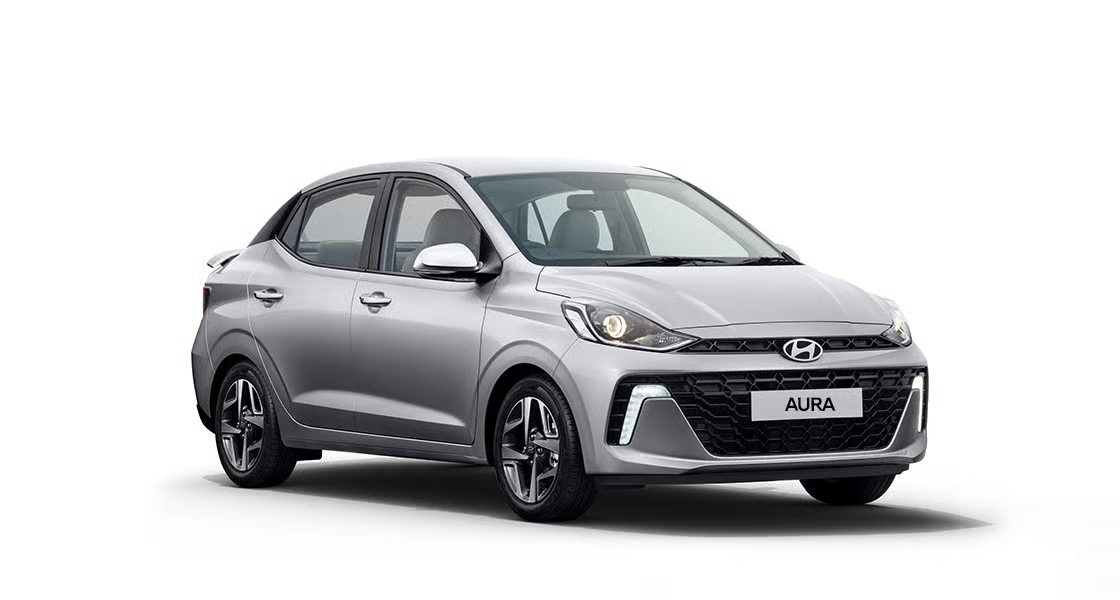
Also Read :- Hyundai Launches i10 and Aura Taxi Variants in India Starting at ₹5.99 Lakh
What the Rankings Say About Buyer Preferences
The 2025 results underline a few clear trends:
SUVs continue to gain share, benefiting brands with strong offerings
Ownership experience matters as much as features and pricing
Network strength and reliability influence high-volume sales
Timely updates can make or break momentum in crowded segments
Manufacturers that aligned product strategy with these trends performed better.
Competitive Landscape Going Forward
With the market becoming more evenly matched, leadership positions may see closer battles ahead.
What to Watch in 2026
New launches and facelifts across high-volume segments
Production capacity and supply-chain stability
Pricing strategies amid cost pressures
Growing role of technology and safety features
Mahindra will aim to defend its second spot, Tata and Hyundai will push back with updates, and Maruti will work to protect its commanding lead.
Final Verdict
2025 reshaped India’s car sales hierarchy. Maruti Suzuki reaffirmed its dominance at the top, Mahindra delivered a breakout performance to secure second place, and Tata Motors and Hyundai Motor India found themselves locked in a tight contest behind.
As competition intensifies and buyer expectations rise, the coming year promises even sharper battles. For now, the rankings reflect a market that rewards consistent execution, strong product-market fit, and dependable ownership experience—and 2025’s results made that crystal clear.
Comments are closed.