

Hyundai has taken a significant step towards expanding its electric vehicle portfolio by unveiling a new 9-seater electric MPV with a claimed range of up to 400 km. This latest reveal underlines Hyundai’s long-term strategy to focus not only on electric SUVs but also on large, practical people-movers that cater to families, fleet operators, and commercial users.
With electric mobility gaining momentum globally, Hyundai’s move signals growing confidence in the EV MPV segment, which has so far seen limited options compared to SUVs and hatchbacks.
A New Direction for Electric MPVs
While most manufacturers are focusing heavily on compact and mid-size electric SUVs, Hyundai’s decision to showcase a 9-seater electric MPV highlights a different approach. Large MPVs are especially popular in:
Big families
Airport and hotel transport
Corporate and fleet usage
Shared mobility services
By electrifying this segment, Hyundai aims to combine space, comfort, and zero-emission driving, something that many urban and semi-urban markets are actively looking for.
Key Highlight: 400km Claimed Driving Range
The biggest talking point of Hyundai’s new electric MPV is its claimed 400 km range on a full charge.
Why This Range Matters:
Makes daily city and inter-city usage practical
Reduces range anxiety for fleet operators
Allows full-day operation with minimal charging stops
In real-world conditions, the actual range may vary based on load, driving style, and climate usage, but even then, it remains competitive for a vehicle of this size.
Battery, Powertrain & Charging Expectations
Although Hyundai has not disclosed complete technical specifications yet, expectations are clear based on Hyundai’s existing EV expertise.
Expected Technical Details:
Battery Pack: Mid-to-large capacity lithium-ion battery
Drivetrain: Front-wheel drive or dual-motor setup (market dependent)
Charging Support: DC fast charging compatibility
Fast Charging: Likely 10–80% in under 45 minutes
Hyundai is expected to focus on battery durability, thermal management, and safety, especially since MPVs often operate for long hours.
Exterior Design: Functional Yet Modern
Design-wise, the electric MPV leans more towards functionality than aggressive styling.
Design Highlights:
Boxy MPV silhouette for maximum cabin space
Clean EV-specific front design with closed grille
LED lighting elements
Sliding doors (expected in select markets)
Aerodynamic body panels for efficiency
The overall design prioritizes space, ease of entry, and passenger comfort, which is crucial in a 9-seater configuration.
Interior & Seating Layout: Built for Comfort
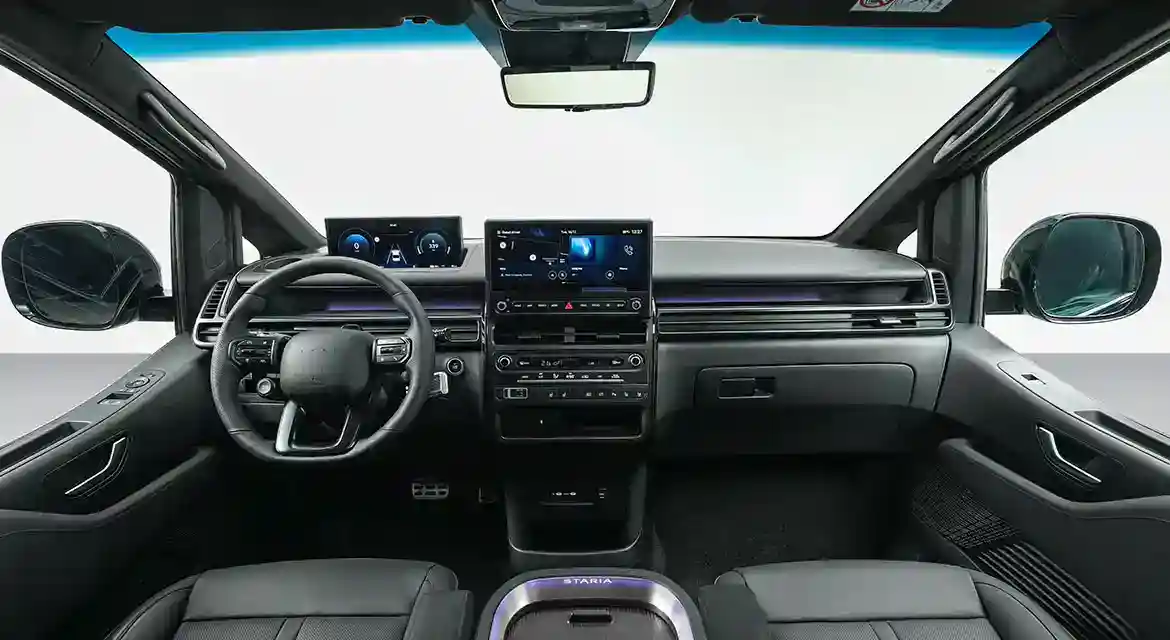
Inside the cabin, Hyundai’s new electric MPV is expected to offer a flexible and comfortable seating layout.
Interior Expectations:
9-seat configuration with multiple row arrangements
Flat floor design due to EV architecture
Large digital infotainment screen
Digital instrument cluster
Rear AC vents for all rows
Multiple USB charging points
Hyundai may also introduce premium variants with captain seats and enhanced upholstery for personal buyers.
Safety & Technology Focus
Safety remains a critical area for large family vehicles, and Hyundai is expected to deliver strongly here.
Expected Safety Features:
Multiple airbags
Electronic Stability Control (ESC)
Advanced Driver Assistance Systems (ADAS)
360-degree camera (higher variants)
ISOFIX child seat mounts
With growing awareness about vehicle safety, Hyundai is likely to position this electric MPV as a safe and reliable family mover.
Also Read :- Volkswagen Virtus Prices Revised in India: New Price List Explained

Target Markets & Use Cases
This 9-seater electric MPV is expected to target:
Urban families needing large vehicles
Commercial and fleet operators
Hospitality and tourism sectors
Corporate transport services
Markets with strong EV adoption and charging infrastructure are likely to see the first launches.
India Launch: A Future Possibility?
While Hyundai has not confirmed an India launch yet, the country presents a strong case:
Growing EV infrastructure
Increasing demand for electric fleet vehicles
Government support for electric mobility
If localized and priced competitively, a 9-seater electric MPV could become popular in airport taxis, hotels, and premium family segments.
Expected Pricing (If Launched)
Pricing will vary by market, but expectations are:
Positioned above compact EVs
Competitive against diesel MPVs in running cost
Attractive for fleet buyers due to low operating expenses
Electric MPVs can significantly reduce fuel and maintenance costs, which is a major advantage for high-usage buyers.
Why This Launch Is Important
Hyundai’s new electric MPV is important because it:
Expands EV options beyond SUVs
Encourages electrification of commercial transport
Supports sustainable mobility for large families
Shows Hyundai’s EV technology scalability
This move could inspire other manufacturers to explore electric people-movers seriously.
Final Verdict
The unveiling of Hyundai’s new 9-seater electric MPV with a 400km range marks an important milestone in the evolution of electric mobility. By focusing on space, practicality, and usability, Hyundai is addressing a segment that has been largely ignored in the EV space.
If brought to production with competitive pricing and strong after-sales support, this electric MPV could play a key role in transforming family and commercial transport in the electric era.
Comments are closed.