
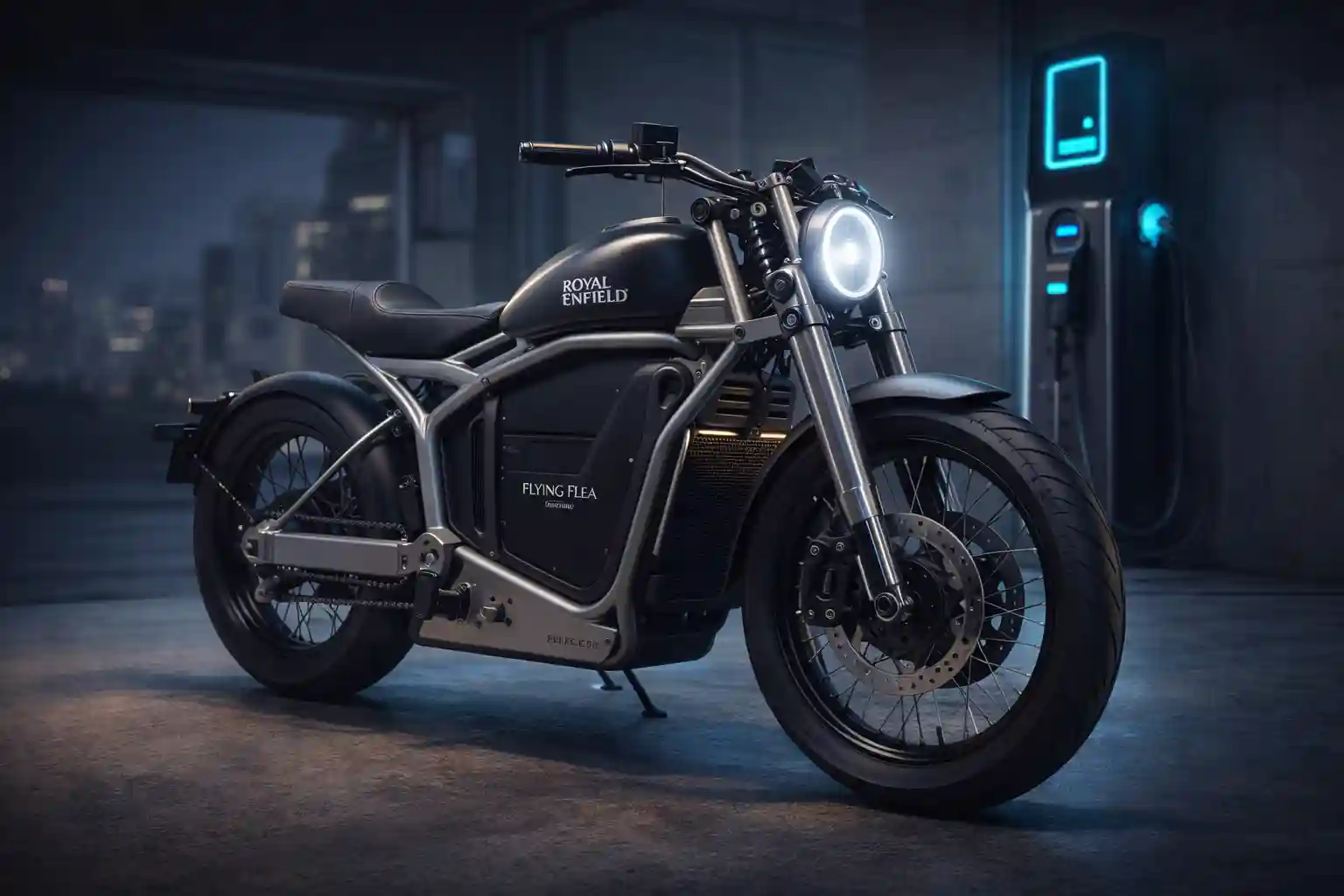
Introduction: The Legend Goes Electric
For more than a century, Royal Enfield has represented a philosophy rather than just a motorcycle brand. Its long-stroke engines, timeless designs, and unmistakable exhaust note — the legendary “thump” — have cultivated one of the most emotionally loyal rider communities in the world. Yet the global motorcycle industry is undergoing an irreversible transformation. Electrification is no longer experimental; it is strategic, inevitable, and rapidly redefining mobility.
Against this backdrop, Royal Enfield’s decision to launch its first-ever electric motorcycle marks a pivotal milestone. This is not simply a technological upgrade or regulatory response. It is a profound evolution of brand identity — an attempt to carry a heritage-driven motorcycling culture into an era dominated by silent propulsion, connected technology, and sustainability.
For enthusiasts and industry observers alike, the transition sparks a fascinating debate: Can an electric Royal Enfield preserve the emotional core that has defined the brand for decades?
The Birth of ‘Flying Flea’: A New Sub-Brand
Royal Enfield’s electric journey is being introduced under a historically significant sub-brand: Flying Flea. Rather than retrofitting an existing nameplate, the company has chosen to revive one of its most iconic wartime motorcycles.
The original Flying Flea was a lightweight 125cc motorcycle deployed during World War II, engineered for agility, portability, and operational efficiency. Designed to be air-dropped alongside paratroopers, it embodied minimalism and mobility — qualities remarkably aligned with modern urban electric transportation.
The first electric model under this sub-brand is widely expected to be called the FF-C6. This strategic branding move is deeply symbolic. It communicates that Royal Enfield’s EV ambitions are rooted in legacy rather than detached from it. Flying Flea represents lightness, accessibility, and versatility — ideal attributes for an electric platform.
Design Philosophy: Where Retro Meets Future
Royal Enfield’s design language has long celebrated mechanical authenticity and classic aesthetics. The Flying Flea EV appears to extend that philosophy while integrating modern engineering.
Girder-Style Front Forks
Among the most visually distinctive features is the use of girder-style front forks. Rare in contemporary motorcycles, girder forks evoke early-era engineering and instantly reinforce the brand’s vintage DNA. Their presence ensures that the motorcycle retains a recognizable Royal Enfield character despite its electric underpinnings.
Forged Aluminum Frame
A major departure from tradition is the adoption of a forged aluminum frame. Conventional Royal Enfield motorcycles typically rely on steel chassis constructions, contributing to their robust and weighty feel. Electric motorcycles, however, demand aggressive weight optimization due to battery mass considerations.
The aluminum architecture significantly reduces weight while enhancing structural rigidity. It also signals Royal Enfield’s intention to position the EV as an agile, city-friendly machine rather than a heavyweight cruiser.
Circular LED Lighting
The motorcycle is expected to preserve the brand’s signature round headlamp design. Internally, however, advanced LED lighting technology delivers improved efficiency and visibility, blending heritage aesthetics with modern functionality.
Performance, Range, and Technology Expectations
While Royal Enfield has yet to reveal complete technical specifications, industry expectations offer insight into the motorcycle’s likely performance envelope.
Battery Configuration and Practical Range
The FF-C6 is expected to deliver a real-world riding range of approximately 120–150 km, aligning with urban commuting and leisure riding needs. Notably, prototypes and early previews strongly suggest that the motorcycle will feature a fixed battery pack.
A fixed battery design enhances structural integrity, chassis balance, and safety — critical factors in premium motorcycle engineering. While removable or swappable batteries are gaining popularity in some EV segments, Royal Enfield appears to be prioritizing ride dynamics and long-term durability.
That said, there is speculation that future Flying Flea models could explore swappable battery technology, particularly for dense urban markets where convenience and rapid turnaround are valued.
Smart Connectivity and Digital Integration
Royal Enfield’s EV is widely expected to embrace connected vehicle technologies, potentially including:
Over-the-air (OTA) updates
Cloud-connected diagnostics
Integrated navigation systems
Smartphone-based controls
Such features reflect the broader industry shift toward software-defined mobility.
Multiple Riding Modes
Selectable riding modes such as Eco and Sport are likely, allowing riders to balance efficiency and performance based on usage scenarios.
The Silent Challenge: Preserving Brand Identity
The defining question surrounding Royal Enfield’s electric future is inevitably tied to sound and sensation. The brand’s identity has historically been intertwined with mechanical rhythm, engine pulses, and acoustic character.
Electric motorcycles eliminate combustion-driven sound signatures. Recognizing this, Royal Enfield’s engineering approach appears centered on redefining the sensory experience rather than artificially replicating it.
Focus areas include:
Immediate electric torque delivery
Smooth throttle response
Tactile rider interfaces
Balanced chassis feedback
Importantly, Royal Enfield is reportedly developing a distinctive “electric soundtrack.” Unlike synthetic speaker-generated sounds, this concept involves a mechanically tuned motor hum — leveraging the motor’s natural acoustic properties to create a signature auditory identity.
While the iconic piston-driven thump may be absent, this innovation could introduce a new, authentic acoustic character unique to Royal Enfield’s electric lineage.
Charging Infrastructure and Ecosystem Strategy
Range anxiety remains one of the primary psychological barriers to EV adoption. To address this, Royal Enfield is expected to leverage its extensive dealership network.
The company plans to establish dedicated “Re-Charge” stations across select showrooms and service centers. This strategy not only supports urban riders but also preserves Royal Enfield’s long-standing touring culture — a critical component of its brand ethos.
By integrating charging infrastructure within its retail ecosystem, Royal Enfield strengthens both practicality and community engagement.
Launch Timeline and Market Positioning
Following successful global showcases, Royal Enfield’s first electric motorcycle is anticipated to launch in the coming months. The FF-C6 is expected to occupy a premium lifestyle segment, reflecting its design sophistication and brand heritage.
Industry estimates suggest a price band of ₹2.5 lakh to ₹3.5 lakh, positioning it alongside premium electric offerings rather than entry-level commuter EVs.
Conclusion: A New Chapter in Pure Motorcycling
Royal Enfield’s entry into electric mobility represents one of the most significant transitions in its storied history. By reviving Flying Flea, adopting heritage-led design, and integrating cutting-edge EV technologies, the company is crafting a bridge between past and future.
For purists, silence may initially feel unfamiliar. Yet Royal Enfield’s approach indicates that character, engagement, and emotional resonance remain central — even in the absence of combustion.
Quick Highlights at a Glance
Brand
Flying Flea (by Royal Enfield)
Primary Model
FF-C6
Chassis
Lightweight Forged Aluminum Frame
Signature Feature
Girder-Style Front Forks
Battery Type
Fixed Battery Pack (Expected)
Estimated Price
₹2.5 lakh – ₹3.5 lakh (Expected)
Expected Launch
Coming Months (2026)