
(News, Alert & Honest Opinion for Indian Buyers)
Electric vehicles are no longer a future concept in India. They are already on our roads, in our parking lots, and increasingly in everyday conversations. Yet, despite this growing adoption, one concern continues to dominate public opinion:
“What if the EV battery fails?”
“Won’t battery replacement cost ₹5–8 lakh?”
This single fear has stopped many serious buyers from switching to electric vehicles. Most of this anxiety comes not from real ownership experience, but from social media claims, outdated information, and conversations with people who have never owned an EV.
So let’s break this topic properly—using facts, practical alerts, and a clear, experience-based opinion.
The News Reality: EV Batteries in India Have Evolved Rapidly
One major mistake people make is judging today’s EVs using old assumptions. Battery technology has changed dramatically in the last few years.
Manufacturers like Tata Motors, Hyundai, and MG Motor have invested heavily in:
Advanced lithium-ion battery chemistry
Better thermal management systems
Smart battery management software
Long-term battery warranties
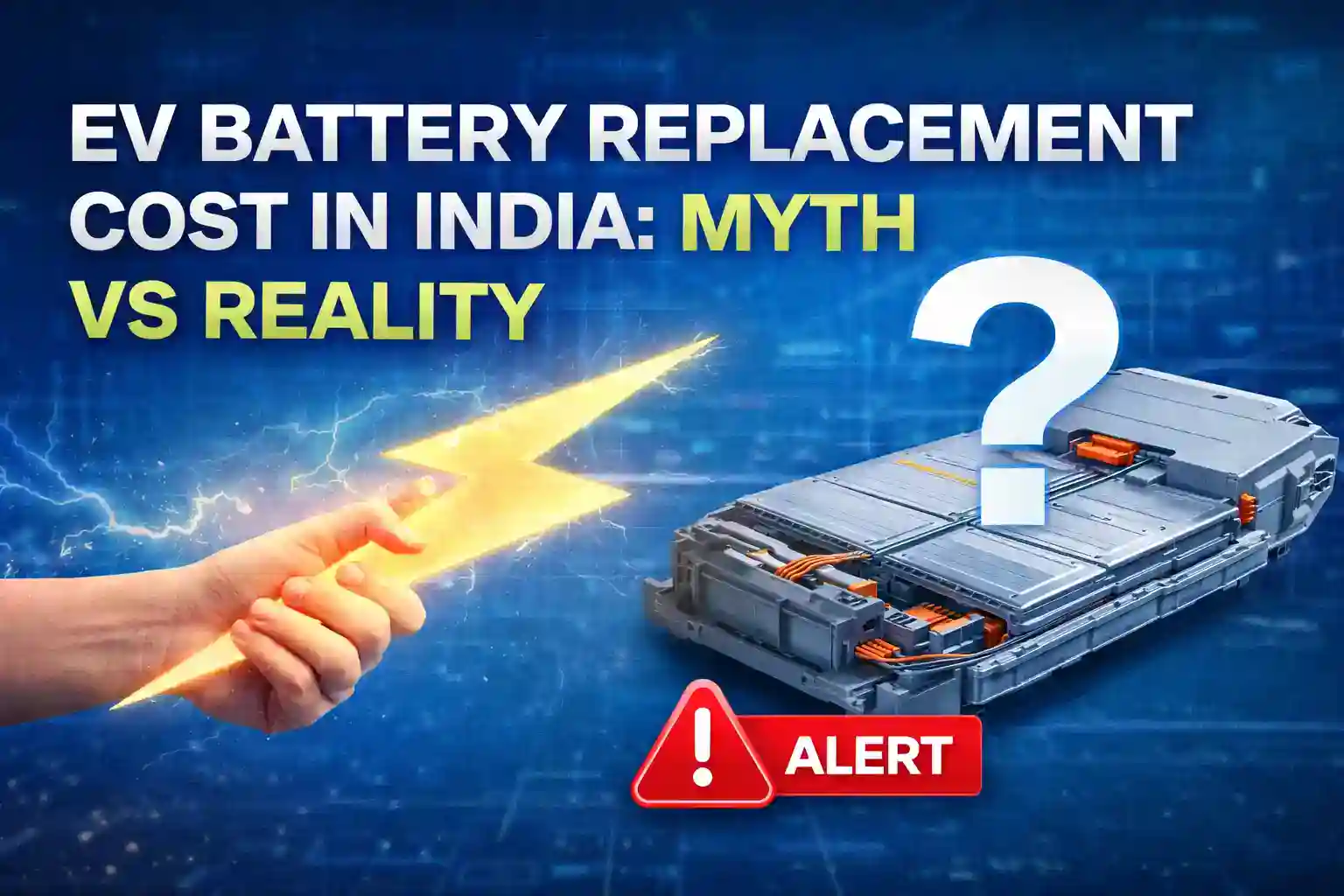
Modern EV batteries are designed specifically for Indian weather conditions, driving patterns, and usage cycles. This is precisely why most mainstream EVs in India now come with 8-year battery warranties. No manufacturer would offer such coverage if battery failure was common or unpredictable.
Myth 1: EV Batteries Need Replacement in 4–5 Years
This is the most widespread misconception.
Reality:
Modern EV batteries are designed to last 8 to 12 years, and often even longer.
What actually happens over time is gradual degradation, not sudden failure.
Average degradation: around 2–3% per year
After 8 years: battery typically retains 70–80% capacity
In practical terms:
A car with a 400 km range may still deliver 300–320 km
The vehicle remains completely usable for daily driving
Batteries do not suddenly stop working. Range reduces slowly and predictably. In fact, most Indian car owners sell or upgrade their vehicles long before battery health becomes a serious concern.
Myth 2: Battery Replacement Will Cost ₹5–8 Lakh for Every Owner
This statement is technically possible, but extremely misleading in real-world ownership.
Yes, a full battery pack is expensive. But almost no EV owner pays the full replacement cost.
Why?
Because EV batteries are covered by long warranties.
For example:
Tata Nexon EV – 8 years / 1.6 lakh km
MG ZS EV – 8 years / 1.5 lakh km
Hyundai Kona Electric – 8 years
If battery health drops below a defined limit during the warranty period, the manufacturer is responsible for repair or replacement. This alone removes the fear of a sudden, massive expense during normal ownership.
Myth 3: One Battery Issue Means Full Replacement
This belief is outdated.
Modern EV battery packs are modular, not single solid units.
They consist of:
Multiple modules
Each module containing several individual cells
If an issue occurs, often only the faulty module is repaired or replaced. This significantly reduces repair cost compared to full battery replacement. This modular approach is already in use in India, though it is rarely discussed publicly.
Important Alert: Comparing EV Battery Fear with Petrol/Diesel Reality
Let’s be honest for a moment.
People fear EV battery replacement, but completely ignore the long-term costs of petrol and diesel vehicles.
What typically happens in an ICE vehicle over 8–10 years?
Engine wear and repairs
Clutch replacement
Turbocharger failures
Gearbox and emission-related issues
These expenses don’t arrive as one large bill, but they add up over time.
Now add fuel costs:
₹6–10 lakh or more over long ownership
This is accepted as “normal ownership”.
In contrast, EVs have:
No engine oil
No clutch
No gearbox
Far fewer moving parts
Even if battery replacement is required after a decade, total ownership cost can still be lower than that of a petrol or diesel car.
Real-World Usage: What Matters More Than Replacement Cost
In day-to-day Indian driving conditions, battery replacement is rarely the real issue. What matters more is:
Proper charging habits
Moderate driving style
Avoiding extreme misuse
Choosing a reliable brand
Most EV battery issues arise from misuse or extreme conditions, not normal urban driving. For city users driving 40–60 km daily, EV batteries operate under relatively low stress.
Also Read :- Hyundai Unveils New 9-Seater Electric MPV with 400km Range – All Details Explained

When Battery Replacement Actually Makes Sense
Battery replacement may be considered if:
The vehicle is 10–12 years old
Range no longer meets usage needs
Warranty period has expired
By that time:
Battery prices are expected to be lower
Technology will be more advanced
Refurbished or upgraded battery options may be available
Today’s fear is based on current prices for a future scenario. That is not a logical basis for decision-making.
Honest Opinion: The Fear Is Overblown
From a practical ownership perspective:
EV battery replacement is not a short-term risk
Most owners will never pay for full replacement
The fear is driven by misinformation, not real experience
The real financial risks today are:
Rising fuel prices
Increasing ICE maintenance costs
Stricter emission regulations
Declining resale value of older diesel cars
Compared to these, EV battery fear is emotional, not factual.
Final Verdict: Myth vs Reality
Myth: EV batteries fail suddenly
Reality: Degradation is slow and predictable
Myth: Battery replacement will bankrupt owners
Reality: Warranties and modular design protect buyers
Myth: EVs are risky long-term
Reality: EV ownership costs are more predictable than ICE vehicles
Comments are closed.