
Introduction: A Major Shift at the Fuel Pump
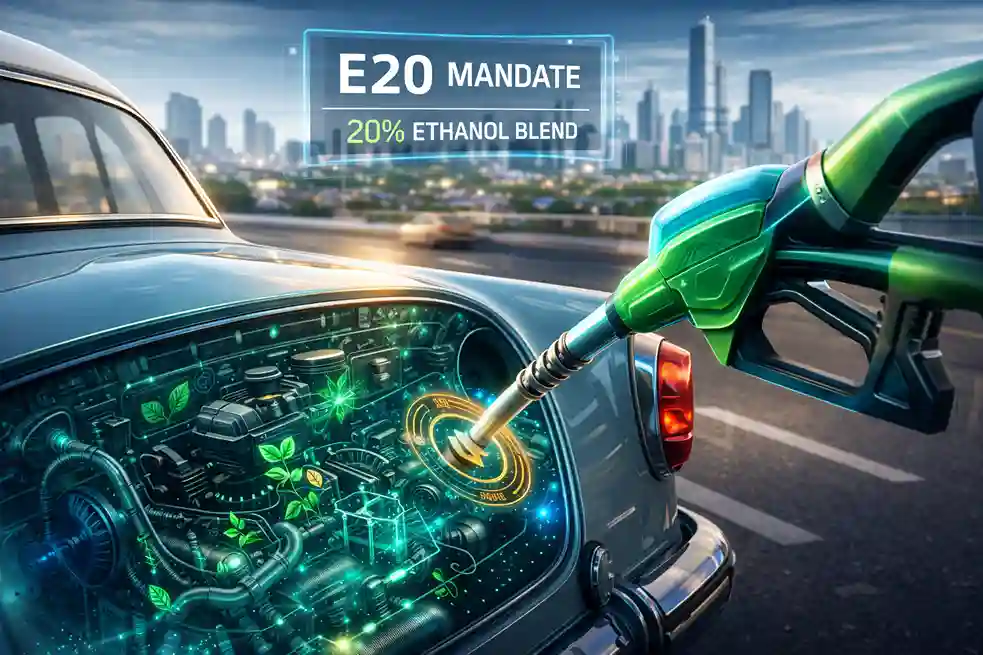
From April 1st, India moves one step closer to its green energy goals with the nationwide rollout of E20 petrol. Oil Marketing Companies (OMCs) are now mandated to supply fuel blended with 20% ethanol and 80% petrol. This shift is aimed at reducing crude oil imports, lowering carbon emissions, and promoting biofuels produced within the country.
While the environmental benefits are clear, vehicle owners have practical concerns. The most common question is:
What will happen to my car or bike if I start using E20 fuel?
Another important question often asked is whether E20 will be cheaper at the pump. While the government aims to keep it affordable to encourage adoption, the real cost-benefit for consumers will depend on how much the mileage drops after switching to E20.
Let’s understand everything in simple and clear terms.
What Exactly is E20 Petrol?
E20 petrol is a blend consisting of:
20% ethanol
80% petrol
Ethanol is a biofuel derived mainly from sugarcane, corn, and agricultural waste. India has already been using E10 petrol (10% ethanol blend) for several years. Increasing the blend to 20% is part of a larger strategy to promote sustainable mobility.
The goals behind E20 include:
Reducing dependence on imported crude oil
Supporting farmers and domestic biofuel production
Lowering harmful vehicle emissions
However, ethanol has different chemical and physical properties compared to petrol, and that difference can impact vehicles—especially older ones.
Why Ethanol Behaves Differently
Ethanol differs from petrol in three major ways:
It contains less energy per litre
It absorbs moisture from the air (hygroscopic nature)
It can be slightly more corrosive to certain materials
Because of these characteristics, engines not specifically designed for higher ethanol blends may behave differently when using E20 fuel.
The Mileage Question: Will Fuel Efficiency Drop?
This is the biggest concern for most vehicle owners.
Lower Energy Content Means More Fuel Consumption
Ethanol contains about 33% less energy than pure petrol. When the ethanol percentage increases, the engine needs to burn slightly more fuel to generate the same power output.
Expected Mileage Impact
Experts suggest that vehicles designed for E10 may experience a 6% to 10% drop in mileage when switching to E20.
For example:
If your vehicle currently delivers 15 km per litre, it may reduce to around 13.5–14 km per litre.
City driving conditions may show a slightly more noticeable drop compared to highway driving.
Manufacturer Warranty Considerations
Leading car manufacturers like Maruti Suzuki, Tata Motors, and Hyundai have already started introducing E20-ready engines in their newer models. These vehicles are built with upgraded materials and engine calibration to handle higher ethanol blends.
However, for older models, using E20 may affect the engine warranty if the vehicle is not officially certified as E20 compatible. It is always advisable to check with your manufacturer or authorized service center regarding warranty coverage.
Impact on Older Vehicles: What Are the Technical Risks?
If your vehicle was manufactured before April 2023, it may not be fully E20 compliant. Here are the potential concerns.
1. Corrosion of Metal Parts
Ethanol absorbs moisture from the air. Over time, this moisture can:
Cause rusting in metal fuel tanks
Corrode fuel injectors
Damage internal fuel system components
Modern vehicles use corrosion-resistant materials, but older vehicles may be more vulnerable.
2. Damage to Rubber and Plastic Components
Higher ethanol content can gradually degrade:
Rubber fuel hoses
Seals and gaskets
Certain plastic components
This may lead to fuel leaks or engine performance issues over time.
3. Lean Air-Fuel Mixture Issue
Older engines often operate with a fixed air-fuel ratio. Ethanol requires less air to burn efficiently. Without proper electronic adjustment, the engine may run “lean,” leading to:
Higher engine temperature
Rough idling
Occasional stalling
Modern vehicles with advanced Electronic Control Units (ECUs) can automatically adjust the mixture, reducing this risk.
Is Your Vehicle E20 Compatible?
Most vehicles launched in India after April 2023 are built to be E20 compliant. Manufacturers have strengthened fuel lines, improved engine mapping, and used ethanol-resistant materials.
How to Check
Refer to your owner’s manual.
Look for a label near the fuel cap.
If it mentions “E20,” you are safe to use the new fuel.
If it says “E10” or has no mention, your vehicle may be older.
It is important to note that while E20 is being rolled out nationwide, E10 petrol may still be available at some fuel stations during the transition period. However, over time, E20 is expected to become the standard fuel across India.
What Can Owners of Older Vehicles Do?
There is no need to panic or replace your vehicle immediately. With proper care, older vehicles can continue functioning safely.
1. Maintain Your Vehicle Regularly
Inspect fuel lines and hoses periodically.
Replace worn-out rubber components early.
Schedule regular engine check-ups.
Preventive maintenance reduces long-term risks.
2. Avoid Long-Term Fuel Storage
Since ethanol absorbs moisture:
Avoid leaving E20 petrol unused in the tank for months.
If storing the vehicle, keep the tank relatively full to minimize air exposure.
This prevents “phase separation,” where fuel and water separate inside the tank.
3. Consider Protective Fuel Additives
Some fuel additives are designed to reduce corrosion and stabilize ethanol-blended fuel. Always consult a trusted mechanic before using them.
Environmental Benefits: Why the Shift Matters
Despite concerns, E20 offers significant environmental advantages:
Lower carbon monoxide emissions
Reduced greenhouse gases
Better air quality
Lower dependence on imported oil
India imports a major portion of its crude oil requirements. Increasing ethanol blending supports domestic agriculture and strengthens energy security.
Quick Comparison: E10 vs E20
| Feature | E10 Petrol | E20 Petrol |
|---|---|---|
| Ethanol Content | 10% | 20% |
| Mileage | Standard | 6–10% lower (approx.) |
| Emission Level | Moderate | Lower emissions |
| Engine Compatibility | Safe for most vehicles | Best for 2023+ models |
Conclusion: Awareness is the Key
The E20 petrol mandate represents a bold step toward cleaner and more sustainable mobility in India. While newer vehicles are ready for this change, older vehicle owners may notice a slight drop in mileage and should pay closer attention to maintenance.
The transition may require small adjustments, but it does not mean immediate engine damage or panic.
Stay informed, check your vehicle compatibility, maintain your engine regularly, and monitor how it responds to the new fuel blend.
Progress always brings change—but with proper awareness, that change can be managed smoothly and confidently.