Introduction
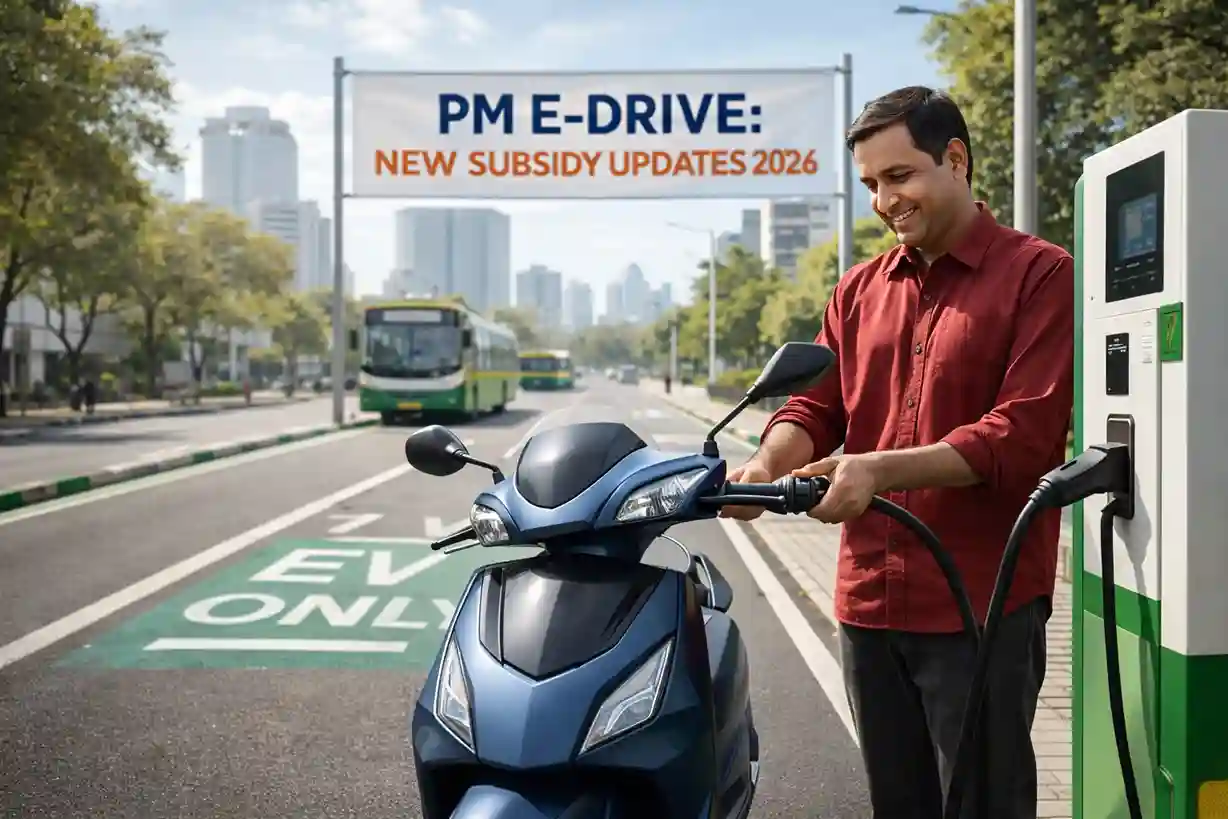
The Union Budget 2026 has delivered a clear and strategic message: India is shifting from short-term electric vehicle discounts to long-term ecosystem building. Presented on February 1, 2026, by Finance Minister Nirmala Sitharaman, the budget announced a ₹1,500 crore allocation for the PM E-Drive (PM Electric Drive Revolution in Innovative Vehicle Enhancement) scheme for the financial year 2026–27.
For commuters, delivery professionals, fleet operators, and anyone planning to buy an electric scooter or car, this budget directly impacts pricing, charging convenience, and future resale value. However, there is an important catch: while infrastructure spending is accelerating, direct purchase subsidies are now in their final phase.
This guide explains what the ₹1,500 crore boost really means, who benefits the most, who needs to act fast, and how Budget 2026 reshapes India’s EV journey.
What Is the PM E-Drive Scheme?
PM E-Drive is India’s flagship electric mobility program and the successor to the FAME-II scheme. Unlike earlier EV policies that focused heavily on upfront discounts, PM E-Drive is designed to balance incentives with infrastructure, public transport electrification, and manufacturing depth.
Total Outlay and Policy Vision
The scheme has a total outlay of ₹10,900 crore spread over two years. Its objectives include:
Demand incentives for electric two-wheelers and three-wheelers
Funding for electric buses and ambulances
Nationwide public charging infrastructure
Reducing long-term EV costs through domestic battery manufacturing
The ₹1,500 crore announced in Budget 2026 is the annual allocation from this larger pool, ensuring continuity through FY 2026–27.
The Big Deadline: Why EV Two-Wheeler Buyers Must Act Now
If you are planning to buy an electric scooter, March 31, 2026 is the most critical date for your decision.
Final Phase of EV Subsidies
Demand incentives for electric two-wheelers and three-wheelers under PM E-Drive are scheduled to end on March 31, 2026. This is officially the final phase of direct EV purchase subsidies from the central government.
Already Reduced Incentives
In FY 2025–26, subsidies were scaled down to:
₹2,500 per kWh
Capped at ₹5,000 per vehicle
This reduction clearly signals the government’s intent to phase out discounts and transition to infrastructure-led adoption.
Immediate Price Impact
Once subsidies expire:
Electric scooter prices may rise by ₹5,000–₹10,000 overnight
Entry-level EV buyers will be most affected
Waiting offers no financial upside
Verdict: For two-wheeler buyers, the best—and possibly last—window to buy cheap is before March 31, 2026.
Ending Range Anxiety: ₹2,000 Crore for Charging Infrastructure
The biggest structural win in PM E-Drive is its aggressive focus on public charging. The government has clearly identified range anxiety as the biggest psychological barrier to EV adoption.
Nationwide Fast-Charging Rollout
Under the scheme:
72,300 fast chargers will be installed nationwide
22,100 for electric cars
48,400 for two-wheelers and three-wheelers
1,800 for electric buses
Why This Changes EV Ownership
This expansion means:
Less dependence on home charging
Easier inter-city and highway travel
Greater confidence for first-time EV buyers
Charging availability—not subsidies—is now the biggest enabler of EV adoption.
New Segments Enter the EV Push: Ambulances, Trucks, and Buses
Budget 2026 expands EV policy beyond personal mobility into public services and logistics.
Electric Ambulances (₹500 Crore)
A ₹500 crore allocation has been made for e-ambulances, promoting:
Quieter emergency response
Zero tailpipe emissions
Lower operating costs for hospitals
Electric Trucks (₹500 Crore)
Another ₹500 crore targets electric trucks, aiming to decarbonize the freight and logistics sector—one of India’s largest pollution contributors.
Electric Buses at Scale
Over 14,000 electric buses are planned, primarily for state transport undertakings, significantly improving urban air quality and reducing fuel imports.
Structural Reform: Customs Duty Exemptions for Battery Manufacturing
One of the most important long-term announcements in Budget 2026 is the customs duty exemption on 35 additional capital goods used in lithium-ion battery manufacturing.
Why This Matters
Batteries account for nearly 40% of an EV’s total cost. Lower production costs mean:
Cheaper batteries over time
Lower EV prices even without subsidies
A stronger domestic EV supply chain
This move shifts affordability from “government discounts” to market-driven cost reduction.
New Battery Passport & Recycling Norms (2026 Update)
To strengthen sustainability, Budget 2026 also reinforces Battery Waste Management and recycling norms.
Battery Passport System
Every EV battery will now carry a Battery Passport, making it traceable throughout its lifecycle—from manufacturing to recycling.
What This Means for Buyers
Slight compliance cost for manufacturers
Better recycling accountability
Higher resale value for EVs
Ensures EVs remain genuinely “green” even after battery retirement
This makes India’s EV policy globally aligned and future-proof.
What Budget 2026 Means for Different Buyers
The impact of PM E-Drive varies based on what you plan to buy.
For Electric Two-Wheeler Buyers
Buy before March 31, 2026
Last chance to claim subsidy
Waiting means instant price increase
For Electric Car Buyers
No direct cash subsidy announced
Massive charging rollout improves practicality
Battery cost reforms benefit long-term pricing
Note for Hybrid Car Buyers
Despite pre-budget speculation, Hybrid vehicles did not receive a GST cut. The ₹1,500 crore PM E-Drive allocation is strictly for Battery Electric Vehicles (BEVs).
If you were waiting for hybrid price relief, switching to a pure EV may offer better long-term benefits.
For Fleet Owners and Businesses
Strong incentives for buses, trucks, and 3Ws
Lower operating costs
Clear long-term policy visibility
State-Level Bonus: Extra Savings Many Buyers Miss
PM E-Drive is a central scheme, but several states continue to offer additional incentives.
States Offering Extra Benefits
Uttar Pradesh
Maharashtra
Tamil Nadu
These states provide road tax waivers and registration fee exemptions. When combined with PM E-Drive’s infrastructure push, buyers can maximize total savings.
Final Verdict: Is Budget 2026 Pro-EV?
Yes—decisively so, but with a strategic shift.
Budget 2026 marks India’s transition from subsidy-driven EV adoption to infrastructure-led scale. While discounts are ending, charging networks, public transport electrification, battery reforms, and recycling norms ensure long-term stability.